

by Luke Cronin
Share
by Luke Cronin
Share
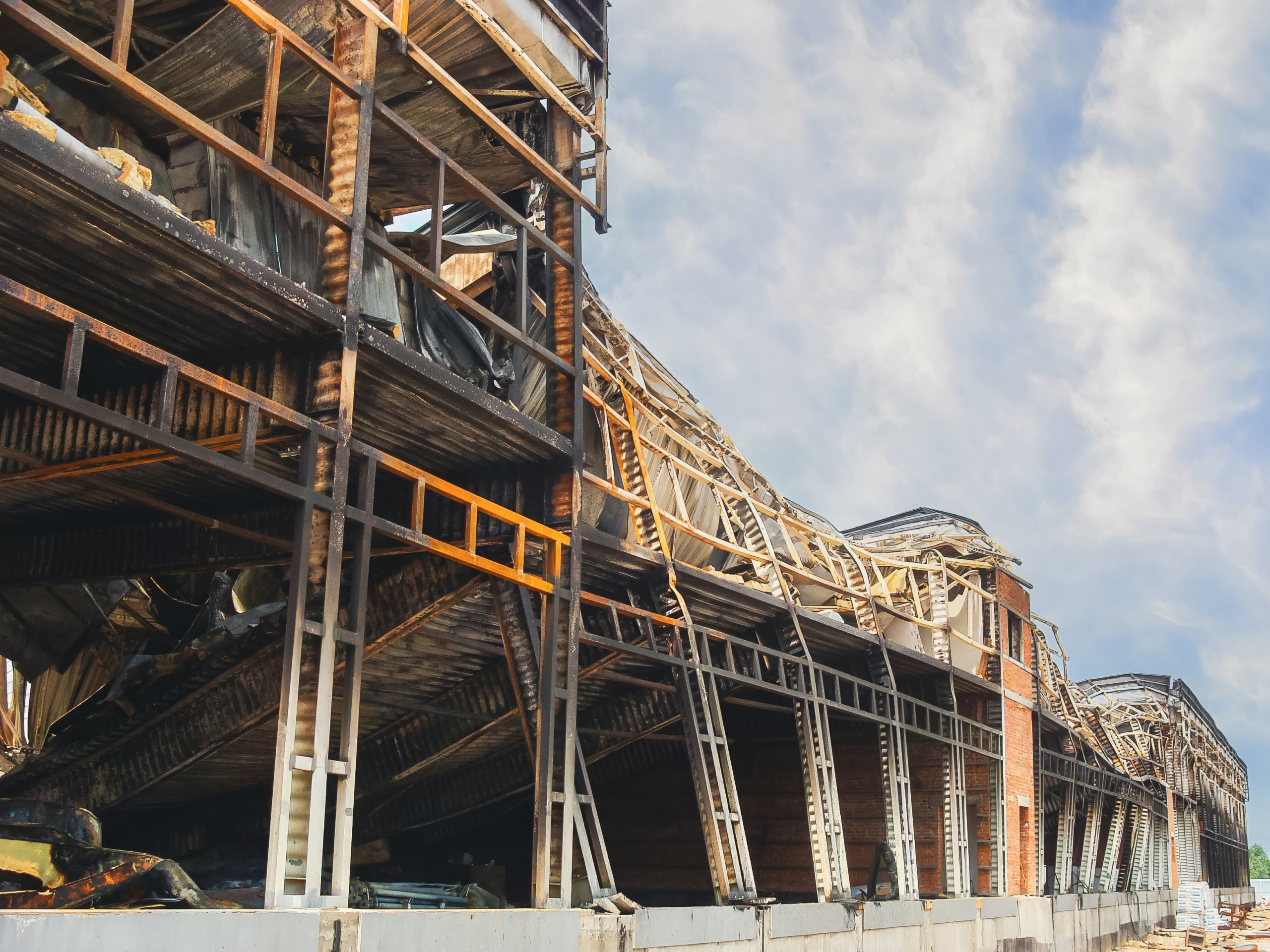
Fire is a formidable force of nature, and its effects can be devastating. When fire damage to steel occurs, the structural integrity of buildings can be severely compromised. Understanding how heat impacts steel is crucial for ensuring safety and reliability in construction. This piece offers a comprehensive look at how fire damages steel and what can be done about it.
How Does Fire Damage Affect Steel?
Steel is known for its strength and durability, but it’s not invincible. When subjected to high temperatures, steel can lose its load-bearing capacity. Here’s what happens:
- Loss of Strength: At around 600°C (1,100°F), steel starts losing its strength, which might lead to structural failures.
- Deformation: Heat damage can cause steel columns and beams to warp or bend, altering the building’s shape.
- Increased Brittleness: Prolonged exposure to heat can make steel brittle.
Each of these effects warrants a detailed structural assessment post-fire to gauge the extent of the damage.
What Happens to Structural Steel After Fire Exposure?
When a fire occurs, evaluating the damage to structural steel is vital to assess whether it can be safely reused or needs to be replaced. This process involves several key steps:
Evaluation Steps
- Visual Inspection:
Start with a thorough visual inspection. Look for:
-
- Obvious deformities like bending or warping.
- Changes in color and surface texture that may indicate the steel has been compromised.
- Material Testing:
Perform both destructive and non-destructive testing to evaluate the steel’s remaining strength. Effective techniques include:
-
- Ultrasonic Testing: Detects internal cracks or flaws.
- Magnetic Particle Inspection: Identifies surface and slightly subsurface discontinuities.
- Load Testing:
Test whether the steel can still bear the designed loads post-fire, which involves:
-
- Simulating expected stresses.
- Verifying if the steel performance aligns with safety standards.
Post-Evaluation Decisions
- Reinforcement or Replacement:
Based on the evaluations, decide whether the steel components need:
-
- Reinforcement: Salvageable sections might only require minimal intervention.
- Replacement: In some cases, replacement is the only viable option.
These thorough assessments guide repair strategies, ensuring the structural integrity and safety of the building remain intact.
What Is Steel Deformation from Fire?
Steel, while renowned for its robustness, doesn’t fare well under extreme heat. When temperatures soar during a fire, structural steel can undergo significant deformation. This is primarily because steel expands when heated, leading to several forms of physical distortion:
- Bending and Warping: As heat causes steel to expand, it doesn’t do so uniformly. Components like beams and columns can begin to bend or warp under the pressures of uneven thermal expansion. This bending is often visible, presenting as sagging ceilings or tilted walls.
- Twisting: Uneven heating can also lead to torsional deformations, where sections of steel twist out of their usual alignment. This occurs when one part of a structural element heats up more quickly than another, causing differential expansion and a resulting spiral effect.
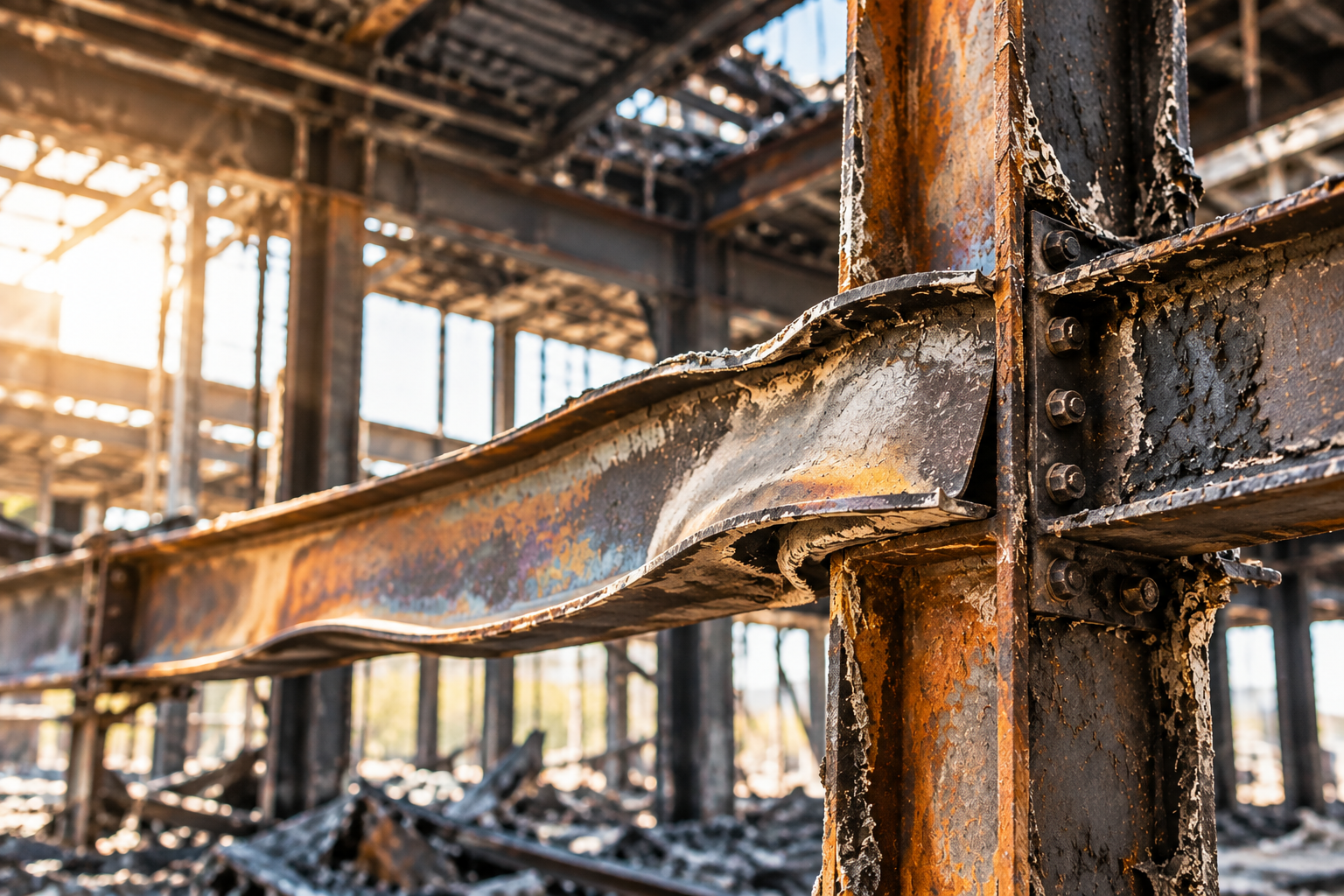
Deformation doesn’t just change the aesthetics; it undermines the steel’s load-bearing capacity. Once steel is bent or warped, its ability to handle the stress of supporting a building diminishes significantly. This makes detailed evaluations, post-fire, crucial to determine whether the steel can be repaired or if it needs replacing. In practice, this could involve precise measurements, computer simulations, and consultations with structural engineers to ensure the building’s safety and integrity moving forward.
Why Is a Structural Steel Fire Assessment Important?
Structural steel fire assessments are crucial for ensuring the safety and integrity of a building post-incident. These assessments are not merely about identifying visible damages; they’re fundamental for safe reconstruction and preventing future catastrophic failures. Here’s why they matter:
Safety Assurance
- Building Safety: A structural assessment ensures the building is safe for occupancy. It helps identify weaknesses that might not be visible to the naked eye, crucial for preventing future accidents.
- Protection: Protects not only those who use the building but also the investment the building represents.
Cost-Effective Repairs
- Early Issue Identification: Identifies and addresses potential issues early, which helps avoid costly repairs.
- Disruptive Remedies: Offers the least disruptive remedies by catching problems early, potentially saving significant sums in the long run.
Role of Structural Engineers
Structural engineers are indispensable in performing these assessments:
- Expertise: Their expertise ensures the assessments are accurate and reliable.
- Technology & Skills: They use a mix of traditional skills and modern technology to assess and interpret data.
With a comprehensive overview from these assessments, owners and builders can make informed decisions that ensure both safety and efficiency in restoration efforts. This proactive approach not only preserves life and limb but also fortifies trust in the structures we rely on every day.
What Should Be Included in a Post-Fire Structural Assessment?
A thorough post-fire structural assessment is critical to gauge the extent of damage and determine the structural soundness of steel components. Here’s what it should encompass:
- Material Integrity: Heat alters the properties of steel, weakening its strength and flexibility. Testing should assess changes in hardness and tensile strength, aiming to understand how the fire has affected these properties.
- Structural Deformation: The assessment should closely examine any warping, bending, or twisting of steel components. This includes checking for bowed beams or buckled columns, which might compromise the structure’s integrity.
- Fire Damage Inspection: Look for surface indicators like charring, scaling, and discoloration. These signs can reveal how much of the steel was directly affected by the fire and to what extent.
The American Institute of Steel Construction’s Facts for Steel Buildings: Fire discusses the strength and reparability of steel after a fire. It provides useful context for evaluating damage and planning repairs.
Why Hire a Forensic Structural Engineer?
When flames wreak havoc on a building, the aftermath is a puzzle, strewn with twisted beams and scorched surfaces. Enter the forensic structural engineer, a detective for the built environment. Their expertise becomes crucial in dissecting the chaos left behind by a fire.
Key Benefits of Hiring a Forensic Structural Engineer
- Expertise in Fire Dynamics:
-
- Forensic structural engineers have an in-depth understanding of how fire affects different building materials, particularly steel.
- By knowing how heat alters steel’s strength and integrity, they can accurately identify vulnerabilities and failures.
- This insight is essential in determining whether damaged steel needs replacement or reinforcement.
- Accurate Damage Assessment:
-
- These professionals are skilled in performing detailed evaluations of fire-affected structures.
- They employ both visual inspections and advanced testing techniques to gauge the extent of damage.
- Their assessments can uncover hidden weaknesses that might not be apparent to the untrained eye.
Advantages of Professional Guidance
By hiring a forensic structural engineer, you gain access to their wealth of knowledge, which provides a reliable foundation for any necessary repairs or rebuilding. They guide you through the complexities of fire damage, ensuring your structure’s restoration is safe and sound.
How Do You Conduct Fire Damage Structural Assessment?
Conducting a thorough fire damage structural assessment requires a systematic approach:
- Initial Visual Inspection: Begin with a walk-through to spot visible damage. Look for obvious signs like charred surfaces, bending, or any warping of steel components. This step sets the stage for more detailed analysis.
- Material Testing: Employ both visual and technical tests to gauge the extent of the material’s damage. This can include non-destructive testing (NDT) techniques like magnetic particle inspection or ultrasonic testing, as well as destructive tests when necessary to examine internal properties and structure changes.
- Detailed Analysis: Utilize computer models to simulate the building’s load-carrying capacity post-damage. This advanced modeling helps predict how the compromised structure might behave under various loads, guiding the repair or reinforcement strategy.
This comprehensive approach ensures a holistic understanding of the fire’s impact, enabling informed decisions on repairs, replacements, or reinforcing strategies to restore safety and functionality.
What Are the Effects of Heat on Steel?
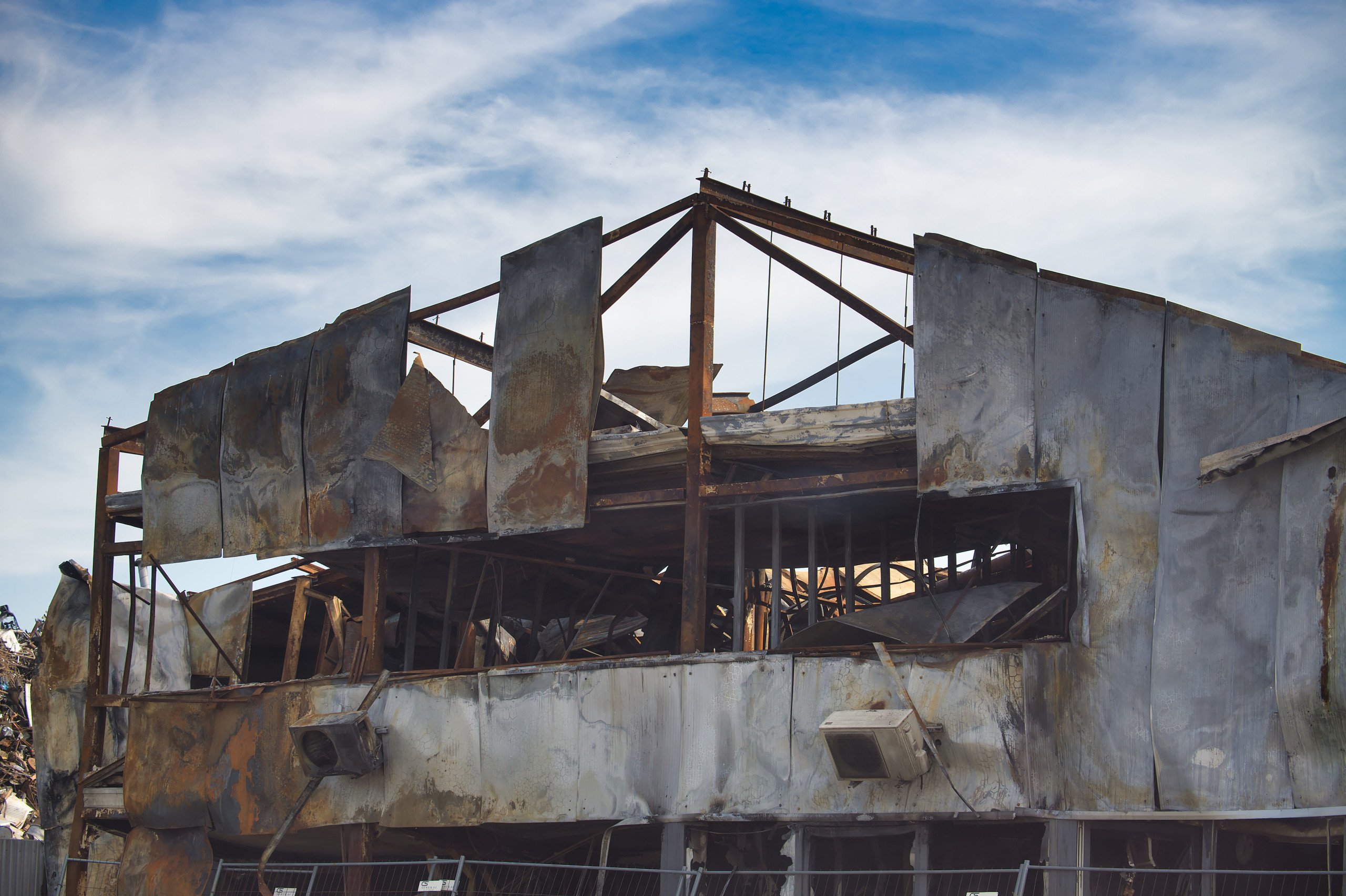
Fire causes significant thermal effects on steel, which include:
- Thermal Expansion: As steel heats, it expands. This expansion can lead to buckling, especially if the steel is constrained. Buckling is a serious concern as it can compromise the load-bearing capacity of beams and columns. The structure’s dimensions can also shift, leading to further instability.
- Oxidation: High temperatures encourage oxidation, a process where steel reacts with oxygen to form rust. This corrosion reduces the steel’s strength and durability over time. Although initial visual signs like discoloration or scaling might be subtle, the long-term impacts can be severe if left unaddressed.
- Phase Changes: Prolonged exposure to heat can cause transformations in the microstructure of steel. These phase changes can alter steel’s mechanical properties, such as toughness and ductility, impacting its overall performance. Recognizing these changes is key to determining whether the steel can continue to be safely used.
Understanding these effects can guide better preparedness and response plans. By acknowledging how heat impacts steel, construction teams can implement strategies to mitigate damage and enhance structural resilience in future projects.
How Can You Strengthen Steel After Fire?
In the aftermath of a fire, the fate of steel components hinges on their current condition. Sometimes, replacement isn’t the only option, and steel can be salvaged through strategic strengthening methods. Here’s how:
- Heat Treatment: This process involves reheating the steel and cooling it at a controlled rate. By doing so, you can restore some of the steel’s lost properties, alleviating issues like brittleness and returning some flexibility to the material’s structure. Heat treatment doesn’t make the steel good as new, but it’s a solid step towards rehabilitation.
- Reinforcement: Think of this as adding a support network to compromised steel. Using additional material, such as steel plates or fiber-reinforced polymers, can bolster areas that have been weakened from heat exposure. The process requires precision to ensure that the reinforcements enhance load-bearing capacity without introducing new stresses.
- Coatings: Applying fire-retardant coatings is a proactive measure. These coatings provide an extra layer of protection against future fires. While they can’t reverse existing damage, they can extend the life of the steel by reducing the rate of future deterioration, ensuring the steel has a better chance of survival in subsequent fire incidents.
These methods, though varied, share a common goal: extending the life of fire-damaged steel. By integrating these treatments effectively, steel structures can regain stability and serve their purpose long after the flames have been extinguished.
FAQs
- How long does a fire damage inspection take?
Generally, inspections can last anywhere from a few days to a couple of weeks. The time frame largely depends on the severity of the fire and the size of the structure being assessed. Quick turnarounds are possible for minor incidents, but larger, more complex evaluations take time to ensure thoroughness.
- Can fire-damaged steel be reused?
Yes, fire-damaged steel can often be reused if it’s assessed to be structurally sound after repairs. This typically involves treatments like heat restoration or reinforcement. It’s crucial that a professional evaluate the steel to determine its viability and ensure any reused material meets safety standards.
- What should I do if I suspect fire damage to steel in my building?
First, hire a forensic structural engineer to conduct a thorough evaluation. They’ll provide a professional assessment, ensuring safety and identifying necessary remediation steps. It’s essential to address potential damages promptly to avoid long-term structural issues.
For further reading on fire damage and assessments, check out the detailed article How Forensic Engineers Assess Fire Damage to Wood Framing.
Understanding the science of fire damage to steel can make a significant difference in handling it effectively. Whether you’re an engineer, builder, or property manager, knowing these basics can safeguard your properties and projects.