

by Luke Cronin
Share
by Luke Cronin
Share
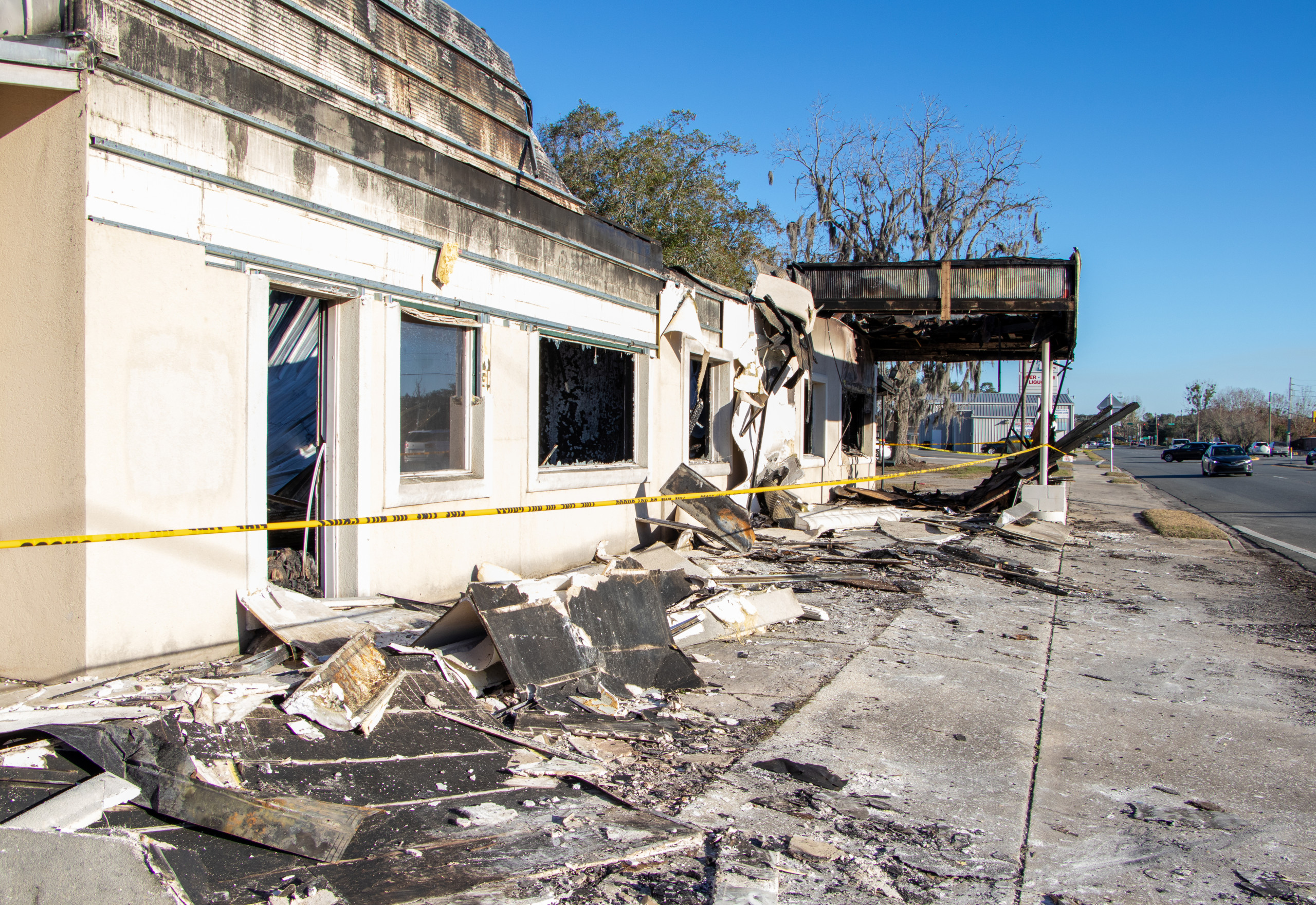
Concrete is robust. However, fire damage to concrete can compromise its structural integrity. Engineers play a critical role in assessing and addressing fire damaged concrete. This guide explains what they look for during inspections and how they determine the next steps.
How Does Fire Affect Concrete?
Heat wreaks havoc on concrete. When exposed to high temperatures, concrete experiences several adverse effects:
- Loss of strength: High heat reduces concrete’s load-bearing capacity. The chemical bonds begin to break down, leading to a weakened structure.
- Spalling: As temperatures rise, moisture within the concrete turns to steam. This results in pressure build-up and can cause pieces of concrete to burst off.
- Color changes: Discoloration often indicates changes in the concrete’s properties. Red or pink hues generally suggest excessive heat exposure.
Concrete might seem invincible, but when fire hits, it takes a beating. Basically, fire gets the chemistry all wrong. The bonds holding everything together start to crack and suddenly, what was once solid isn’t quite feeling up to the task. Spalling is a messy affair, imagine chunks popping off like popcorn. Heat and moisture mix things up into a steam-fueled cocktail; not the refreshing kind, but one that dismantles your walls. And color? Reach for hues more suited for an abstract painting than your basement. Those reds and pinks are warning signs that the concrete’s seen hotter days than it can handle.
What Are the Signs of Concrete Fire Damage?
During a fire damage inspection, engineers look for these key signs:
- Spalling: One of the most obvious indicators, spalling refers to the surface degradation where chunks of concrete may have burst off due to intense heat. This happens when trapped moisture within the concrete turns to steam, causing pressure that breaks apart the material. Engineers pay close attention to areas with visible surface loss, as it can be both a symptom and a precursor to deeper structural issues.
- Cracking: New or expanded cracks on the surface of concrete suggest that the material has experienced thermal stress. The rapid temperature changes during a fire can cause the concrete to expand and contract, leading to cracks that weaken the overall structure. Engineers examine the size, location, and pattern of cracking to assess the severity of the damage.
- Deflections: Post-fire, engineers observe any changes in the shape or alignment of concrete members. A beam or slab that appears bent or misshapen could indicate internal damages that affect load-bearing capacity. Such deflections are critical red flags that require immediate attention to prevent potential structural failures.
- Discoloration: Heat exposure can cause concrete to change color, often turning shades of pink, red, or brown due to mineral transformations. These color shifts not only signal that the material has been exposed to high temperatures but may also suggest weakened structural integrity. Engineers use these visual cues to pinpoint areas needing further evaluation.
By identifying these signs, engineers can make informed decisions about the structural health of a building and the necessary steps to ensure its safety and functionality.
How Do Engineers Conduct a Concrete Fire Damage Assessment?
A thorough concrete fire damage assessment involves several steps:
- Visual inspection: This is the frontline approach where engineers start by observing the structure with a discerning eye. They look for obvious signs like spalling, cracking, and discoloration. It’s a quick way to get a snapshot of the surface-level damage and lay the foundation for more detailed investigations.
- Material sampling: Engineers take small samples of concrete from different parts of the structure. These samples undergo rigorous lab testing to ascertain the material’s current state, such as its chemical composition and remaining strength. It’s like getting a blood test for the building, revealing weaknesses not apparent to the naked eye.
- Non-destructive testing (NDT): The idea here is to peer inside the concrete without causing further damage. Techniques such as ultrasonic pulse velocity testing and ground-penetrating radar are pivotal. These methods allow engineers to map internal flaws and voids, essentially creating an inside-out blueprint of the concrete’s health. NDT is a game-changer as it combines precision with preservation.
These steps form a comprehensive approach, allowing engineers to not only verify the extent of damage but also to chart a path forward, balancing safety concerns with economic considerations.
Can Fire-Damaged Concrete Be Repaired?
Yes, fire-damaged concrete can be repaired, but it really depends on the extent of the damage. Engineers must consider several factors before deciding whether repair is viable or replacement is necessary.
Key Considerations for Repair
- Heat Exposure Level
-
- Assessment: Engineers first assess the level of heat exposure to determine how much the concrete has been compromised.
- Analogy: Much like bread left too long in the oven, some parts may be salvageable, while others could be burned beyond repair.
- Remaining Strength
-
- Evaluation: The next step is to evaluate the remaining strength of the concrete to see if it can safely bear loads.
- Analogy: Think of it as a cracked phone case, you need to determine if it will still function or if it’s time for a replacement.
- Repair Feasibility
-
- Consideration: Finally, there’s the question of repair feasibility. Patching up can sometimes be like fixing an old car, where it may prove more costly and problematic than beneficial.
- Decision: Engineers weigh the costs and practicality of repairs against replacing sections entirely; often, starting fresh is more economical and reliable than trying to mend damaged concrete.
In essence, while repairing fire-damaged concrete is possible, it’s not guaranteed. An engineer’s evaluation walks the line between deciding if the material is salvageable or needs a complete redo, always prioritizing safety and practicality.
What’s the Role of a Forensic Structural Engineer?
Forensic structural engineers are crucial players in post-fire investigations. They’re the detectives of the structural world, tasked with peeling back the layers to understand what went wrong and why. Their work encompasses several key stages:
Damage Evaluation
- Initial Assessment: Begins with a meticulous evaluation of the damage.
- Impact Analysis: Assesses how widespread the impact is.
- Integrity Check: Pinpoints weak spots and evaluates how severely the fire compromised the structure’s integrity.
Causation Analysis
- Detailed Exploration: Involves digging deep to unravel the hows and whys of the damage.
- Scientific Inquiry: Focuses on the science behind the damage, such as:
-
- Conditions that exacerbated the fire’s effects on materials like concrete.
- Existing flaws or design issues that might have worsened the situation.
- Preventive Objective: Aims to prevent future recurrences by understanding causation.
Technical Advice and Guidance
- Repair Consultations: Provides technical advice, guiding repair and remediation efforts.
- Structural Decisions: Weighs in on whether a structure can be salvaged or if it’s a lost cause.
- Cost-Effective Solutions: Offers insights for determining the most cost-effective and safe course of action, which can include:
-
- Surgical repairs of affected areas.
- Full-scale demolition and rebuild options.
Understanding fire damage to concrete is essential. Forensic engineers provide critical insights into the extent and seriousness of damage. Their assessments guide decisions on repair or replacement, ensuring safety and structural reliability. By addressing fire damage promptly and thoroughly, you safeguard not just buildings, but lives.
How Do You Ensure Safety After a Fire?
Post-fire safety is crucial. Engineers recommend:
- Immediate inspection: Quick action helps identify urgent repairs needed. A prompt assessment can prevent further risks by addressing potential hazards that may not be immediately visible. Engineers look for structural integrity issues and note any urgent problems that could compromise safety.
- Monitoring: Regular follow-up inspections to catch gradual changes. Continuous monitoring ensures that any delayed structural weaknesses or alterations are quickly identified and managed. This ongoing process helps in tracking the long-term effects of fire exposure on the material and the overall structure.
- Reinforcement or demolition: Depending on outcomes, strengthening or removing affected structures may be necessary. Engineers must decide whether to fortify weakened areas or, in more severe cases, carry out partial or complete demolition. The decision balances safety, cost-effectiveness, and the structural feasibility of repairs, always prioritizing safety above all else.
FAQs
- What effects of heat on concrete should be considered? Heat causes chemical and physical changes, reducing strength and causing spalling.
- How important is concrete strength after a fire? Very. It determines if the structure can remain standing or if repairs are viable.
- What’s concrete spalling after a fire? Concrete spalling after a fire refers to surface damage where pieces break off due to steam pressure or thermal expansion.
- Can concrete fire damage be effectively assessed? Absolutely. With proper inspection methods like the above, damage is effectively assessed.
- What resources are available for understanding structural effects of fire damage? Check out Precast/Prestressed Concrete Institute’s “Design for Fire” and explore “Fire Damage to Wood Framing: What Forensic Engineers Assess” for more details on how materials respond to fire.